Why Most Insulated Water Bottles Lose Temperature Faster Than Expected
Keeping water cold for hours sounds simple. Yet for many users, insulated bottles fail far sooner than promised. Ice melts halfway through the day, drinks warm up unexpectedly, and condensation appears when it shouldn’t.
This isn’t bad luck — it’s a design and performance issue that most people don’t realize until after long-term use.
As user expectations rise in 2026, more people are asking why insulated bottles lose temperature, not just which bottle looks good. The answer lies in how these bottles are engineered, not how they’re marketed.
The Biggest Reason Insulated Bottles Fail
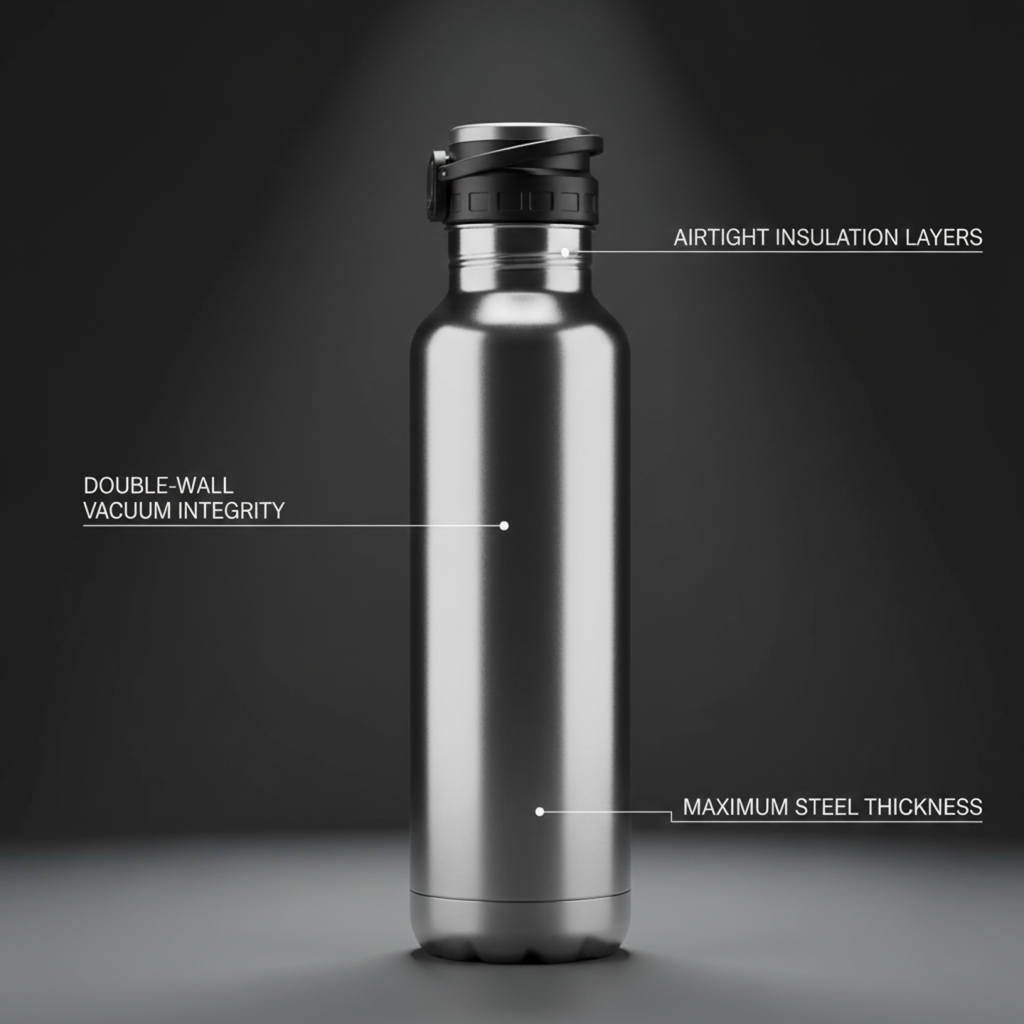
Most insulated bottles rely on double-wall vacuum insulation, but that alone doesn’t guarantee long-lasting cold retention.
- Weak or inconsistent vacuum sealing
- Heat transfer through poorly designed lids
- Thin or uneven stainless steel walls
- Manufacturing shortcuts that reduce long-term performance
Even small defects in these areas can cause gradual temperature loss over time.
Why Lids Are the Hidden Weak Point
One of the least discussed problems is the lid.
While the bottle body may be well insulated, the lid is often the primary source of thermal leakage.
Common Lid Issues
- Plastic components that conduct heat
- Loose threading that allows air exchange
- Inadequate internal seals
- Straw or flip mechanisms that compromise insulation
In many real-world tests, temperature loss begins at the lid, not the bottle walls.
Steel Thickness and Thermal Leakage
Not all stainless steel performs the same.
Many bottles prioritize lighter weight and lower cost, resulting in thinner steel walls. While this may improve portability, it often reduces insulation stability.
What Actually Works Better
- Balanced steel thickness (not ultra-thin)
- Uniform wall construction
- Strong bonding between inner and outer chambers
This is why two bottles with similar descriptions can perform very differently in daily use.
Environmental Factors Most Users Ignore
Even a well-built insulated bottle can lose performance faster due to usage patterns.
- Frequent opening throughout the day
- Direct sun exposure during travel or outdoor use
- Low ice-to-water ratio
- Repeated refilling with warm liquids
Performance-focused bottles are designed to minimize these effects, while lifestyle bottles are not.
How Performance-Focused Bottles Are Engineered Differently
Modern performance drinkware is built around consistency, not aesthetics.
From an engineering perspective, long-duration cold retention depends on vacuum stability, steel quality, and lid sealing efficiency.
This type of research-driven evaluation is replacing impulse buying and trend-based choices.
How to Identify a Bottle That Holds Cold Longer
- Minimal condensation after hours of use
- Consistent temperature retention across a full day
- Solid lid construction with tight sealing
- Durability under daily stress, not just desk use
These indicators matter far more than branding or appearance.
Traditional Insulated Bottles vs Performance Designs
Traditional Insulated Bottles
- Lifestyle-oriented
- Average cold retention
- Broad, non-specific use cases
Performance-Focused Drinkware
- Engineering-driven design
- Long-duration temperature stability
- Built for extended use and activity
This distinction explains why many users upgrade after repeated disappointment with standard bottles.
Why Users Are Rethinking Their Choices
Search behavior shows a clear shift. Instead of asking, “Which bottle is popular?”, users now ask:
- Why does my insulated bottle warm up so fast?
- How long should cold water actually last?
- Is extreme cold retention worth it?
These are performance questions — and only performance-engineered bottles answer them consistently.
FAQs Based on Real Search Behavior
Why do some insulated bottles keep ice longer than others?
Because of stronger vacuum integrity, better lid sealing, and higher steel quality.
Is all vacuum insulation the same?
No. Manufacturing precision plays a major role in real-world performance.
How long should cold water last in a quality insulated bottle?
Between 24 and 48 hours under normal daily conditions.
Why does condensation appear on some insulated bottles?
It usually indicates insulation failure or poor exterior coating.
The Bigger Picture
Insulated drinkware is no longer judged by marketing claims. Users now value measurable performance, durability, and consistency.
As expectations continue rising, bottles that fail at temperature control will lose trust regardless of how popular they once were.
Disclosure
This article may contain reference links to products discussed for informational purposes. If readers choose to explore those resources, the site may receive a small commission at no additional cost. Content is written independently and reflects research-based analysis, not promotional endorsement.