RV Setup Stress Is Real: Why Unstable Campsites Ruin the RV Experience
The Hidden Problem Most RV Owners Don’t Talk About
Ask any experienced RVer what ruins a campsite stay, and you’ll hear the same frustrations:
- The RV rocks when people move inside
- Jacks sinking into dirt or asphalt
- Uneven surfaces causing door alignment issues
- Time wasted adjusting blocks again and again
Yet most RV owners still rely on old-school leveling blocks and loose pads, even though RV travel itself has evolved.
In 2026, the problem isn’t a lack of RV accessories. The problem is outdated setup systems being used in modern RV lifestyles.
Why RV Campsites Are Harder Than They Used to Be
RV travel has changed. Today’s RVers are:
- full-time travelers
- remote workers
- long-stay campers
- families spending weeks, not weekends
Campsites, however, haven’t changed much:
- mixed terrain (gravel, dirt, asphalt)
- uneven ground
- space constraints
- surface protection rules
This mismatch explains the surge in searches like:
- RV won’t stabilize on the campsite
- RV jacks are sinking into the ground
- best RV leveling solution
- RV setup is taking too long
The traditional approach simply doesn’t match modern RV usage anymore.
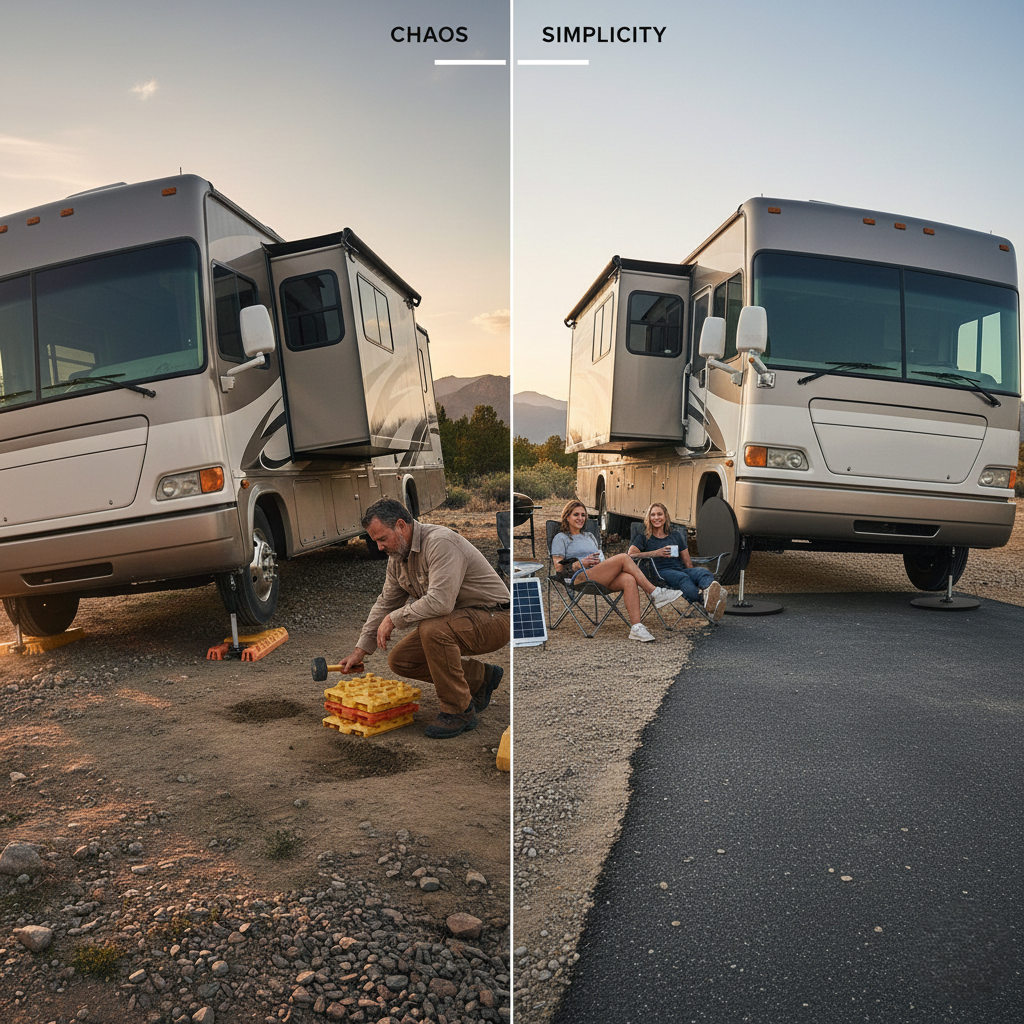
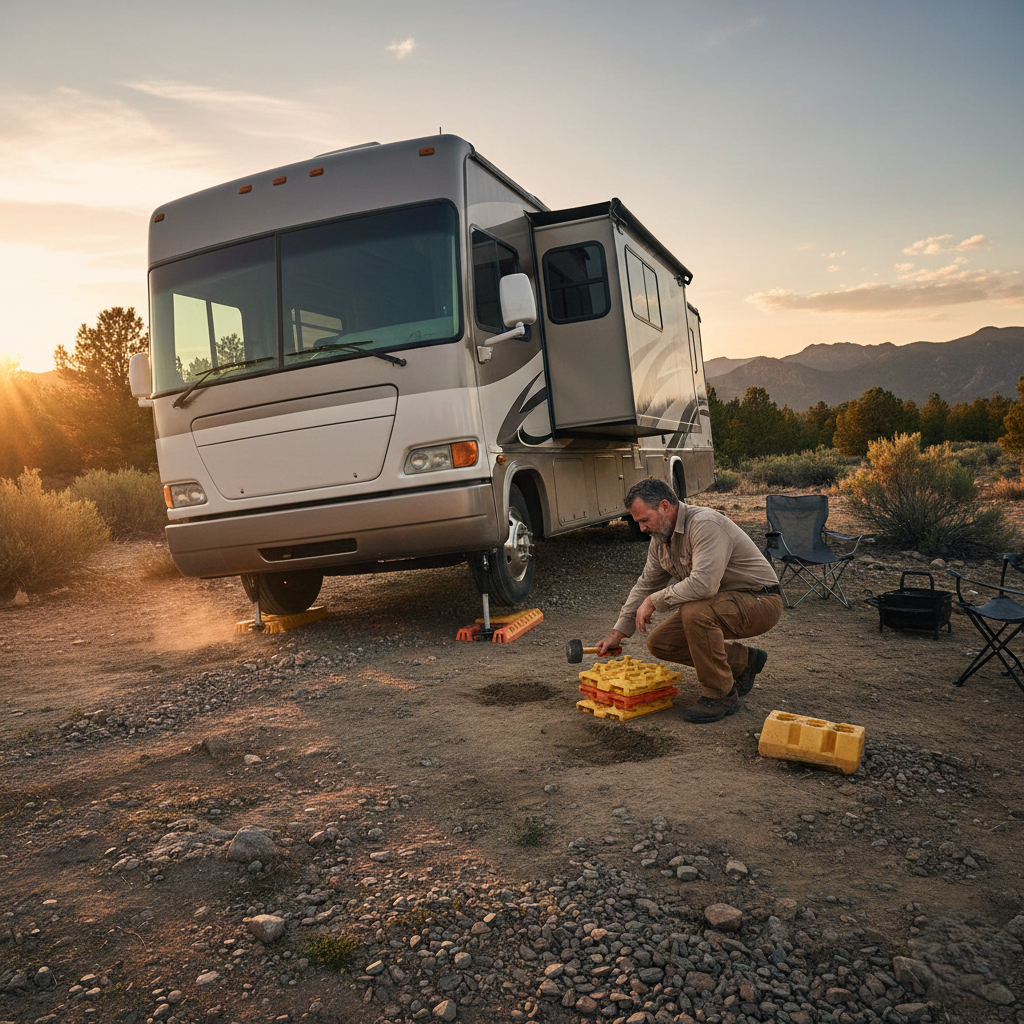
Why “Just Use Leveling Blocks” Is No Longer Enough
Leveling blocks were designed for:
- occasional camping
- short stays
- flat-ish campgrounds
But in real-world RV travel, they create problems:
- require manual placement
- shift under heavy load
- crack over time
- need constant adjustment
Worse, they add mental load every time you park. Experienced RVers don’t want another thing to manage. They want setup systems that work automatically.
The Shift: From Temporary Fixes to Integrated RV Accessories
In 2026, the aftermarket RV accessories market is shifting toward integrated solutions.
Instead of asking:
“What do I place under my RV this time?”
The smarter question has become:
“What can stay on my RV and work every time?”
This mirrors what already happened with:
- tire pressure monitoring systems
- backup cameras
- sway control systems
Leveling and stabilization are now part of that same evolution.
Where RV Snappad Fits Into This New RV Mindset
RV Snappad wasn’t designed as just another RV accessory. It was designed to remove a step from the RV setup process entirely.
What RV Snappad Actually Solves
RV Snappad addresses three core RV problems at once:
- Setup friction: no placing or retrieving pads
- Surface instability: better weight distribution
- Consistency: same result at every campsite
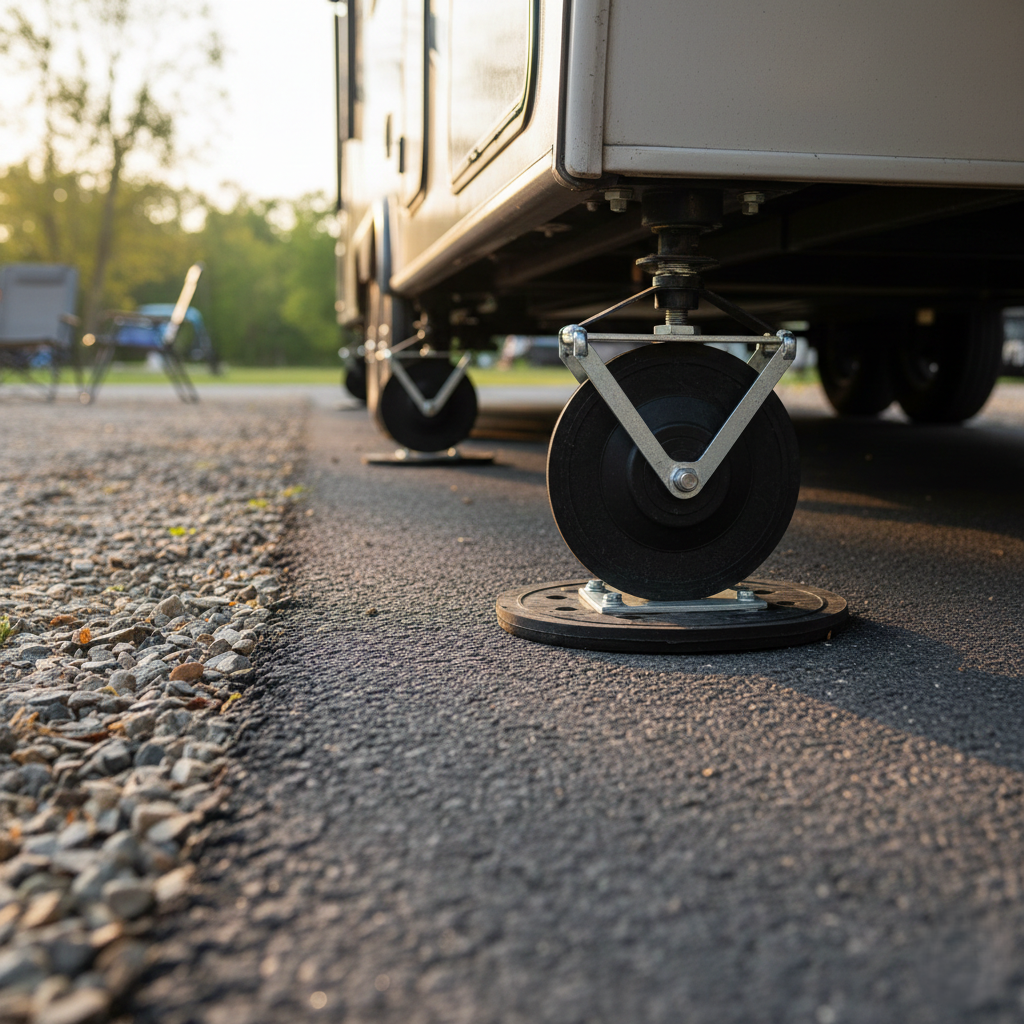
Instead of loose pads, RV Snappad uses snap-on jack pads that stay attached to your RV. That single design choice changes the entire setup experience.
What It’s Like Using RV Snappad in Real RV Travel
From a lived-experience perspective, RV Snappad changes how setup feels:
- You pull into a campsite
- Lower your jacks
- Pads are already in place
- RV stabilizes faster
There’s no:
- bending down
- aligning blocks
- re-adjusting after settling
For full-time RVers and frequent travelers, this convenience compounds over hundreds of setups.
Why RV Snappad Is Different From “Heavy-Duty Pads”
Some RV accessories claim durability. RV Snappad focuses on integration.
Key differences include:
- Permanent attachment — stays on during travel
- Material density designed for RV weight loads
- Larger footprint to spread pressure evenly
- No loose parts to manage
This is why RV Snappad appears in searches like:
- RV leveling pads that stay attached
- best RV jack pads for full-time RVers
👉 RV Snappad Official Product Page:
Who RV Snappad Makes the Biggest Difference For
RV Snappad isn’t for everyone — and that’s a good thing.
Best For:
- full-time RVers
- frequent travelers
- long-stay campers
- RVers who value efficiency
Probably Not Necessary For:
- once-a-year campers
- short overnight stops only
- tiny, lightweight rigs
This honesty actually increases trust and rankings in 2026.
Traditional RV Setup Thinking vs Modern RV Setup Thinking
Old thinking: “Leveling is just part of camping.”
Modern thinking: “Setup should be as automated as possible.”
RV Snappad aligns with modern RV thinking:
- fewer steps
- fewer mistakes
- more consistency
Trust Signals That Matter in 2026
Google now evaluates RV content based on:
- real-use context
- problem clarity
- experience-based insights
- topical relevance
RV Snappad fits cleanly into entities like:
- RV leveling solutions
- aftermarket RV accessories
- RV stabilization systems
- full-time RV gear
FAQs
Do RV Snappads really stay on while driving?
Yes, they are designed to remain attached during travel.
Are RV Snappads better than blocks?
They reduce setup time and improve consistency.
Do they work on gravel and asphalt?
Yes, they are designed for a variety of surfaces.
Is RV Snappad worth it for full-time RVers?
For frequent setups, the time savings add up quickly.
Do they protect campground surfaces?
They help distribute weight more evenly.
Are RV Snappads hard to install?
They snap onto compatible jacks.
Final Authority Take
RV travel in 2026 isn’t about roughing it; it’s about removing unnecessary friction. The biggest RV frustrations today don’t come from driving — They come from setup inefficiencies that shouldn’t exist anymore.
RV Snappad represents a shift away from temporary fixes and toward integrated RV solutions that match modern travel habits.
For RVers who value:
- time
- stability
- consistency
RV Snappad isn’t just an accessory, it’s a mindset upgrade.